For all the many, many words I insist on spilling onto Lotus Eater, it is regrettable that I spend such a paltry few of them on recommending unique and relatively-obscure videogames. Yeah, sure, come check out my boutique media blog, I’ve got the intellectual bravery and critical audacity to recommend such niche gems as Final Fantasy and that French game that won all the awards. Have I mentioned that I love the Marvel-themed Overwatch clone?1 Well, for the moment at least, I intend to a place a few more stones on the too-oft-neglected side of the scale and tell you about an interesting videogame that you probably have not played.
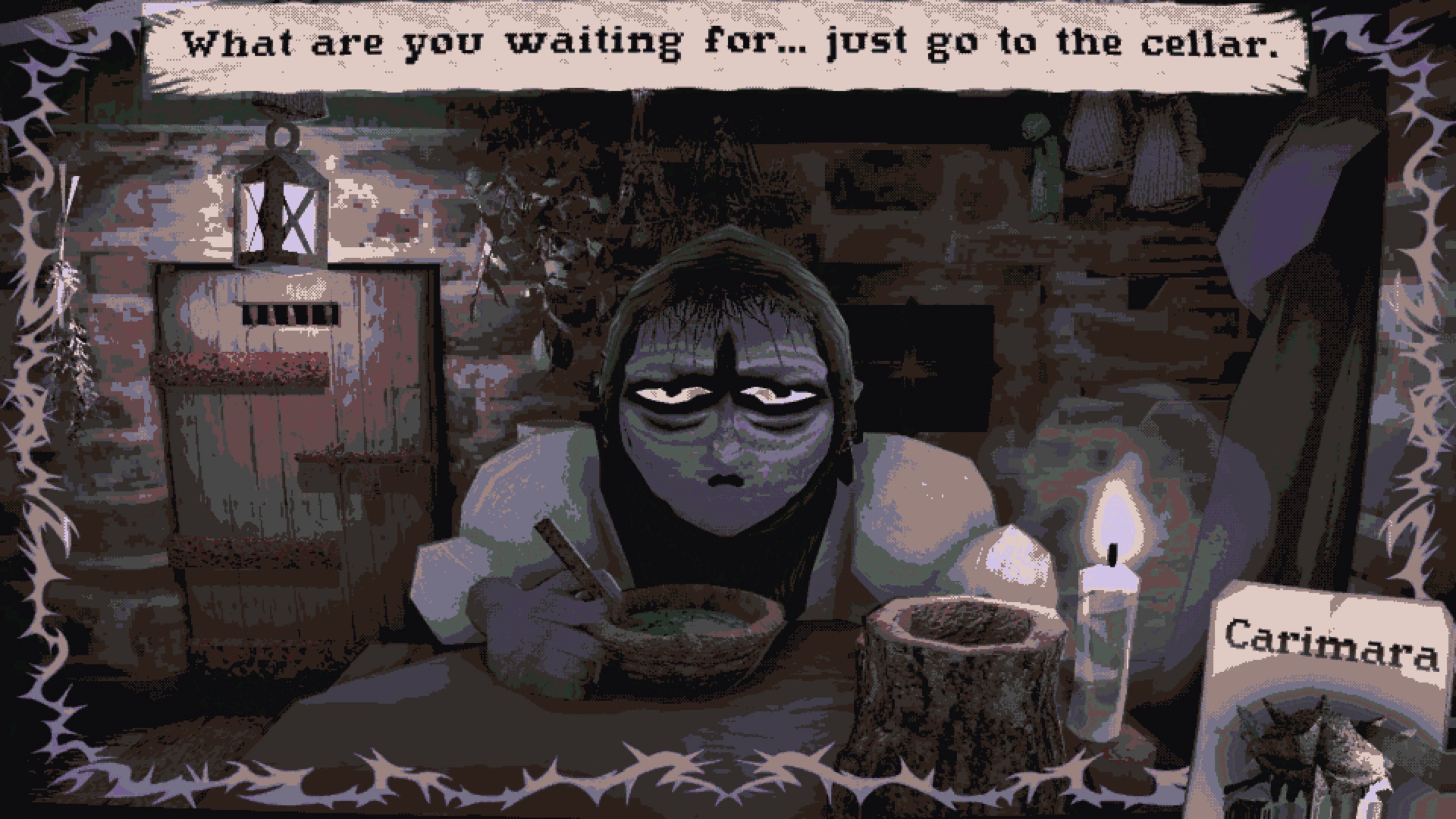
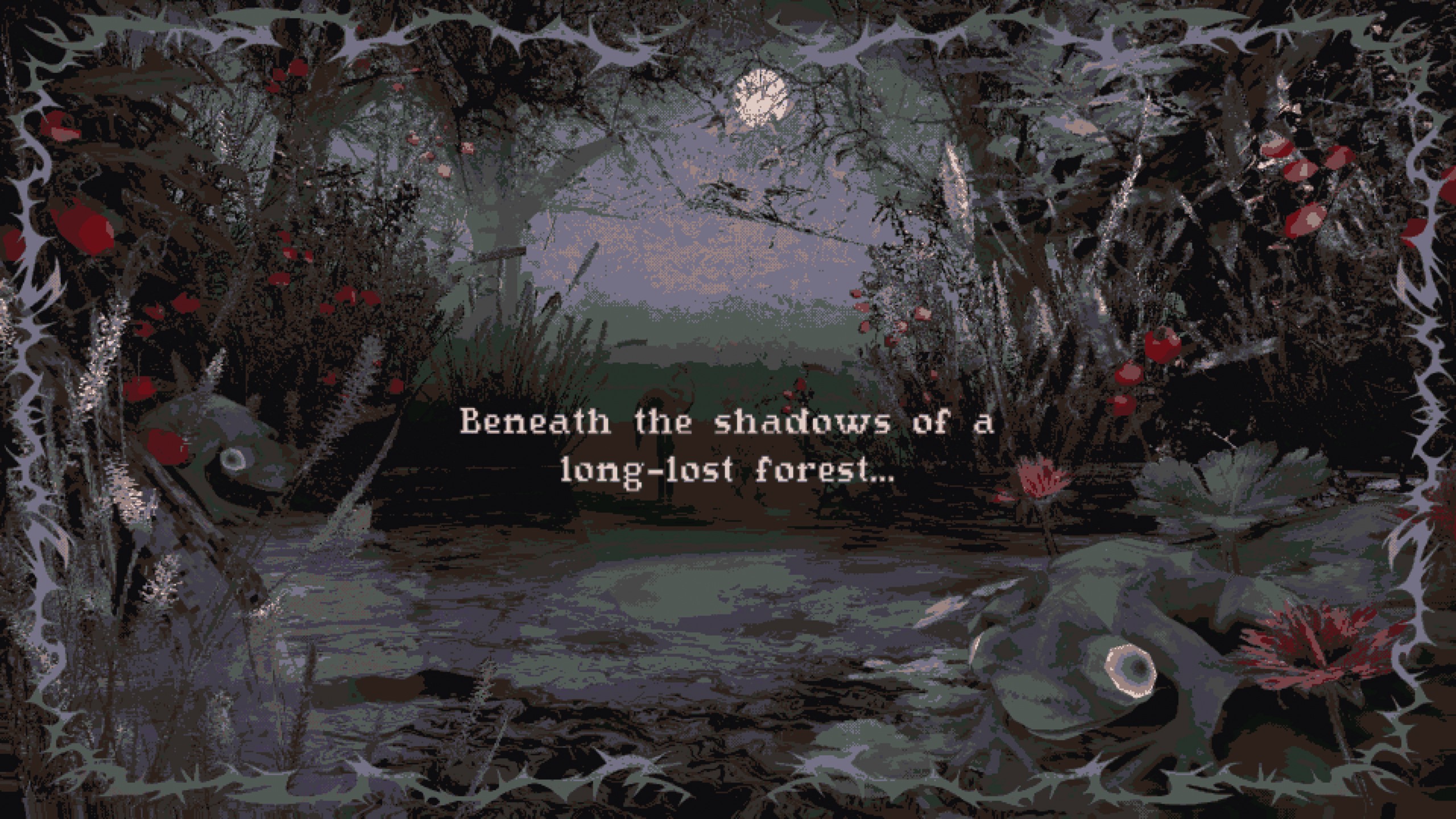
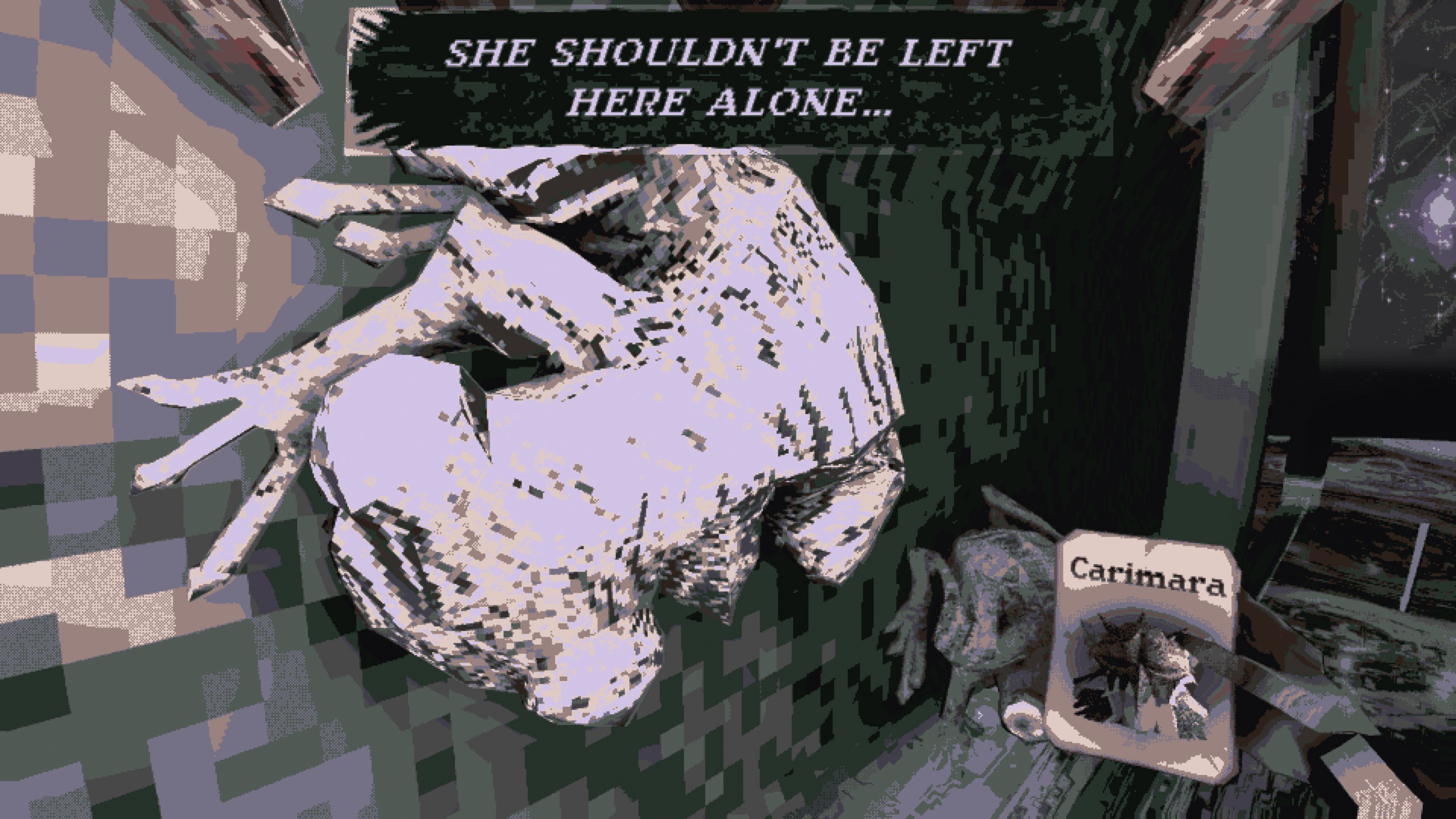
CARIMARA: Beneath the forlorn limbs2 puts players in the role of the eponymous Carimara, a quiet little fellow with access to enough magic to deal with any ghost problems that happen to crop up in the village. The Carimara is ostensibly based in French folklore though its exact provenance is unclear to me; anglophone though I may be, googling the word “Carimara” solely produces results related to the game. Regardless, the premise and setting are familiar enough, communicated to the player in a charmingly-janky little animation at the game’s outset. We are then introduced to one of CARIMARA’s chief characters and its chief form of gameplay: a menacingly-crotchety elderly woman demands that we proceed to the cellar and deal with Whatever is Down There and we are given the option to communicate with her using cards, each representing some concept encountered in the game. We begin with the “Carimara” card alone but are quickly prompted to attend to the dolls hanging from the ceiling—perhaps they might also be a worthwhile topic of conversation? Nearly all gameplay in CARIMARA is based in using these cards, be it asking questions, making accusations, interacting with objects, or… something more abstract.
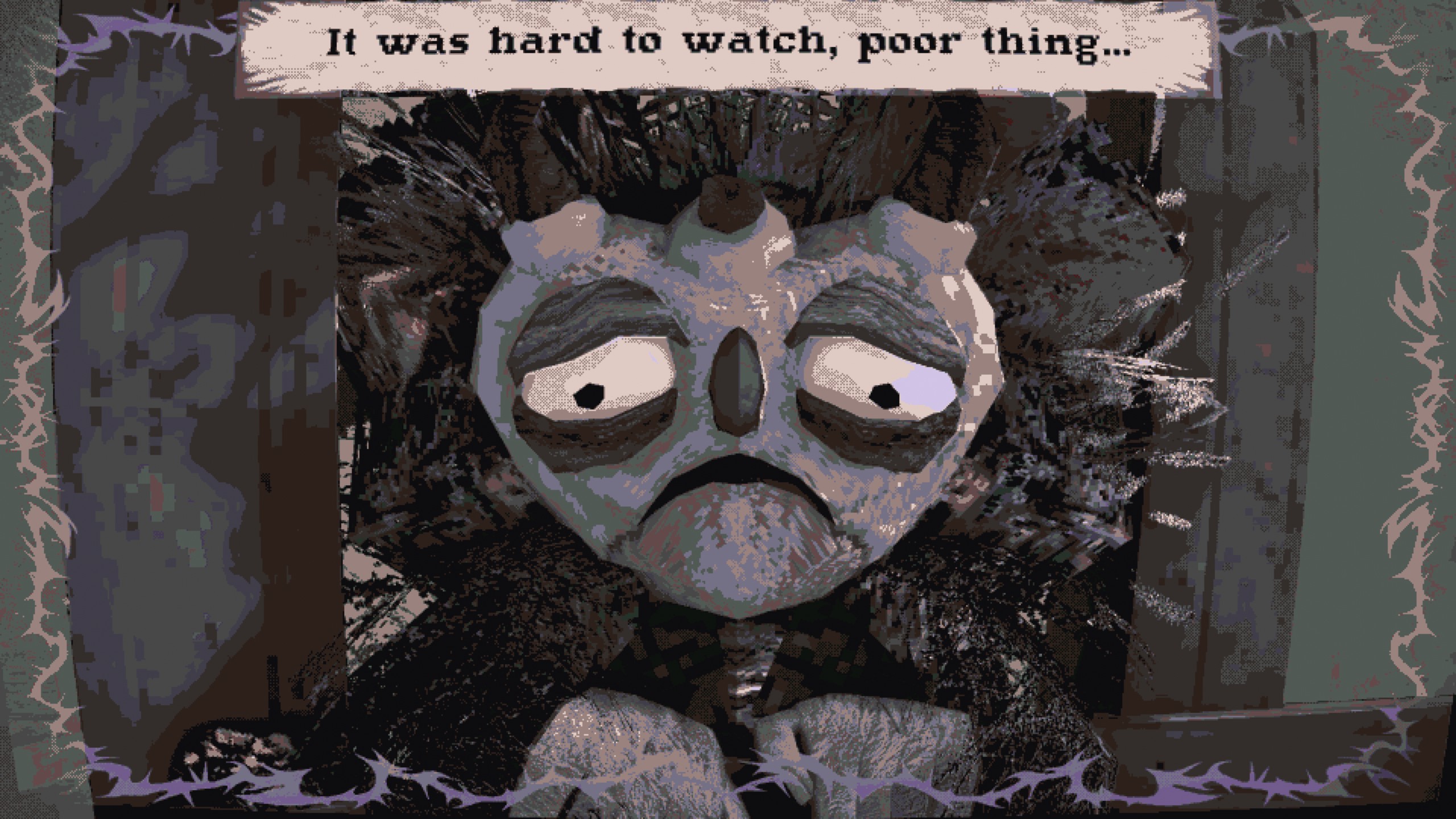
That is about as much information as I think that you should have before playing CARIMARA though. It takes less than an hour to play and a great deal of the game’s appeal is the sense of discovery and surprise embedded in every minute of its brief duration. The game is, to me, the epitome of a short, impactful interactive experience. At all times, it is some combination of funny, haunting, surprising, or touching. Every aspect of the game was clearly crafted with intention and affection: the unusual colour palette and unsettling art style; the careful use of animation and surprise meant to inspire some blend of fear and mirth; the sparse writing that manages to be both poignant and droll in spite of its austerity. Even small details stand out, like the shock of thorns that frames the screen during conversations or the outer ridge of the Carimara’s helm that is always visible during exploration. It feels a bit trite to use words like “editing” and “direction” when discussing a videogame, but in one so brief and constrained as this, there is no getting away from it: someone clearly worked very hard to ensure that something would be stirred within you every few moments during your time with CARIMARA.
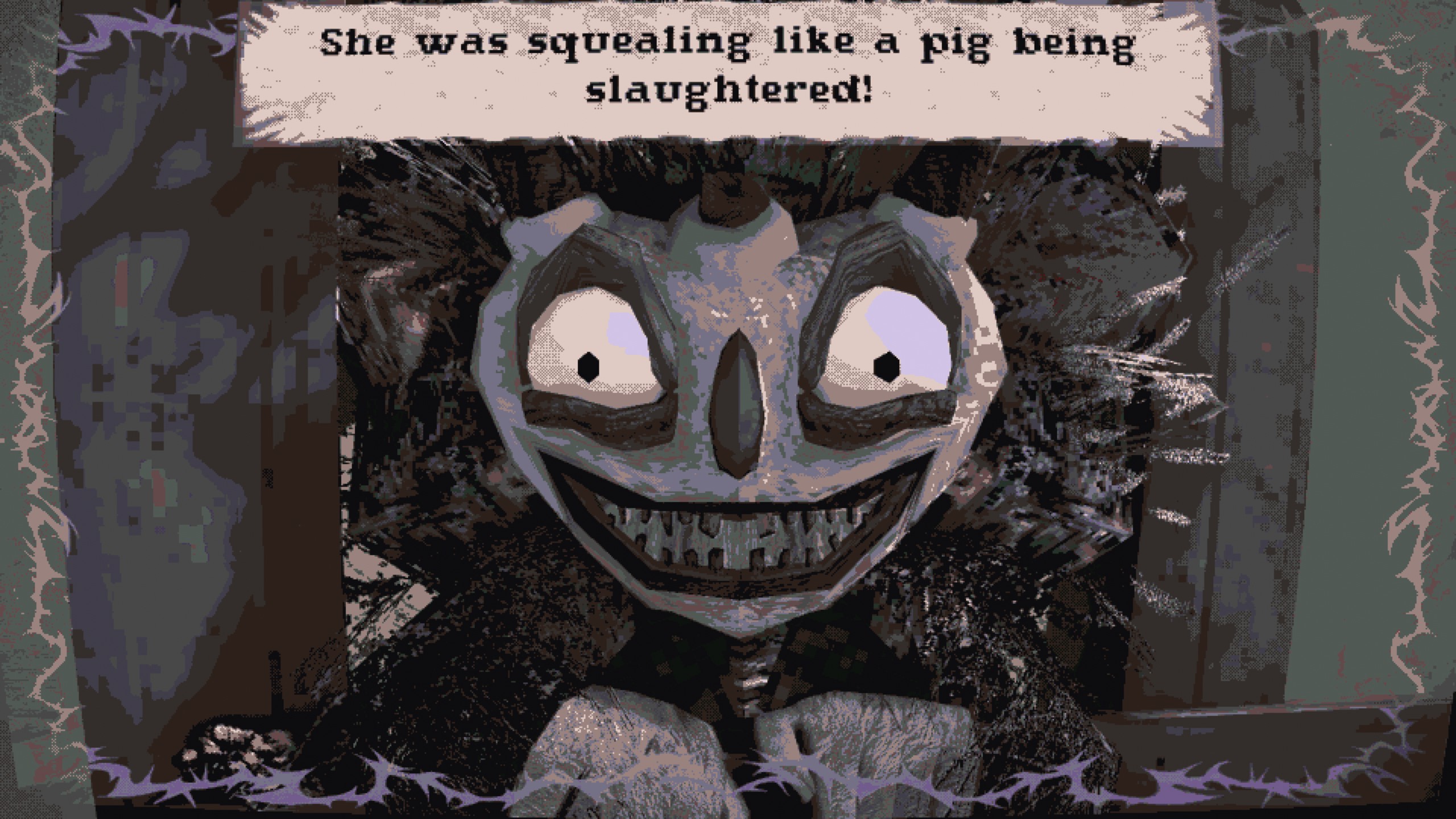
It would be easy enough for me to continue heaping compliments onto CARIMARA: Beneath the forlorn limbs3 but I would risk overselling it to you or tainting your experience with it. The game has so many lovely secrets and surprises in store for you though, both big and small, and it really is a rich and rewarding experience that respects your time and earns your curiosity. My only complaint about it is that it immediately inspired in me a desire for more of these little episodes and I do so hope that the developer continues to produce stories of this ilk. Once you have completed CARIMARA and its credits have rolled, the developer entreats directly with the player or, more aptly, the presumed-viewer: “If you are watching this game being played on a stream, please consider buying it. It only costs about the same as a nice sandwich.” Well, joke’s on you buddy, you absolutely cannot get a nice sandwich for $6 in my city.
Some final errant thoughts:
I think that CARIMARA: Beneath the forlorn limbs is an extremely cool name for a videogame. If that wasn’t enough to sell me on it, the Steam description seals the deal: “A mute little thing with borrowed magic. A house that murmurs back. Ask wrong, and you might wake something that remembers your name.” That’s a synopsis so intriguing that I probably just could have replaced this entire post with that text and gone on with my day.
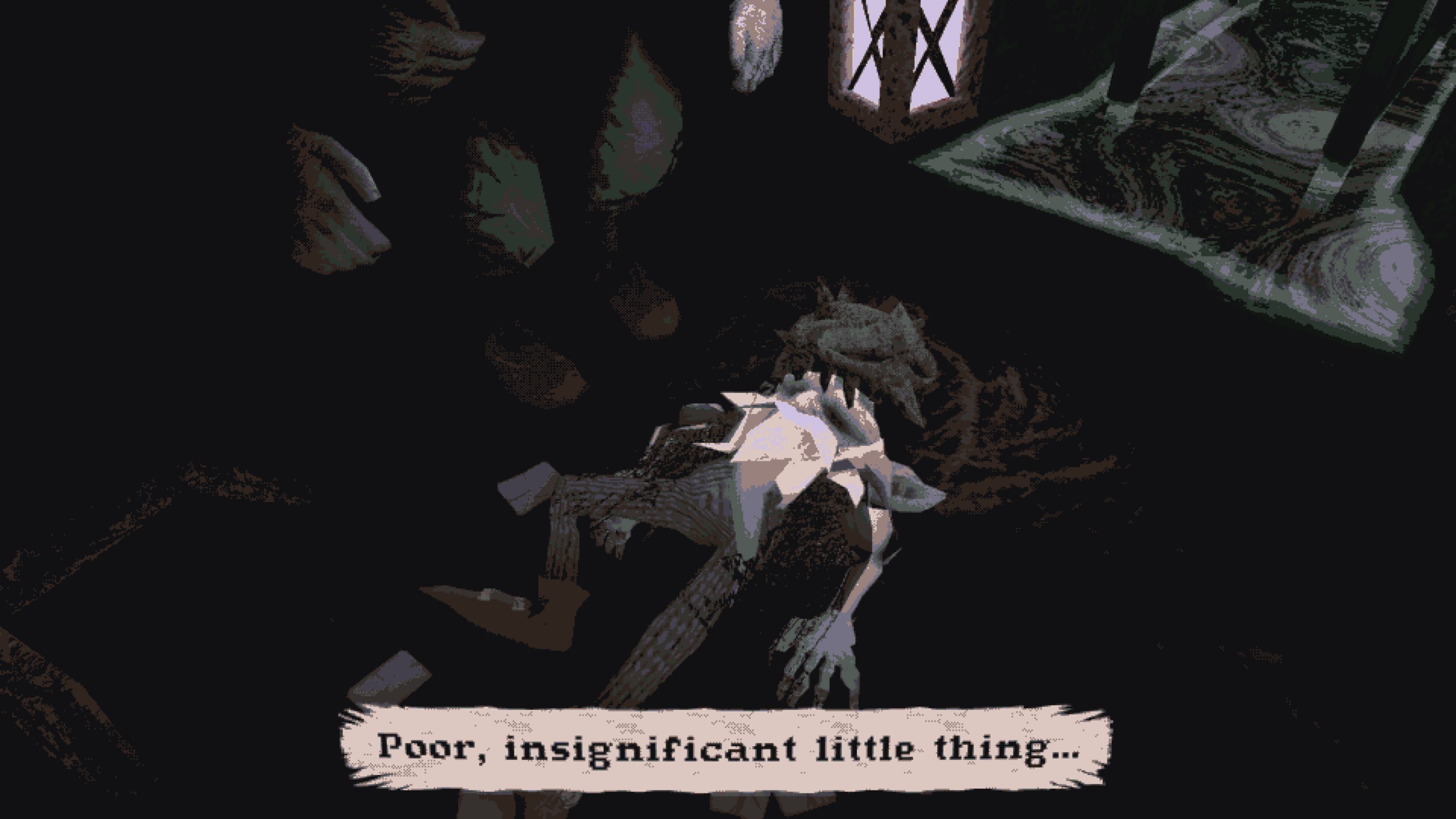
There were so many screenshots that I wanted to include in this post but I didn’t want to spoil too many of the game’s precious moments.
I beat the game in about 40 minutes when I first played it. That said, there is certainly more to uncover for those with a curious heart and an adventurous spirit…
Footnotes
I also wrote what are probably some of the most reverential reviews of Who’s Lila? and Lorelei and the Laser Eyes ever written though and no one can take that away from me.↩︎
I both respect and appreciate the careful use of capitalization in this title and so I intend to replicate it here, in spite of the fact that it makes the title of the post somewhat ugly.↩︎
And I will: I loved the game’s soundtrack with its combination of eerie ambience and strained pipe organ melodies. I also loved the vocal “performances” in CARIMARA. I do not know whether their voices were synthesized or human-made but after hearing them speak a few times, you realize that they are not speaking what you initially assumed to be videogame-gibberish but extremely-sped-up French. With a little attention and a few years of French immersion education, you can actually fully understand them; that the game is nearly-fully-voiced is one of its sillier surprises.↩︎